
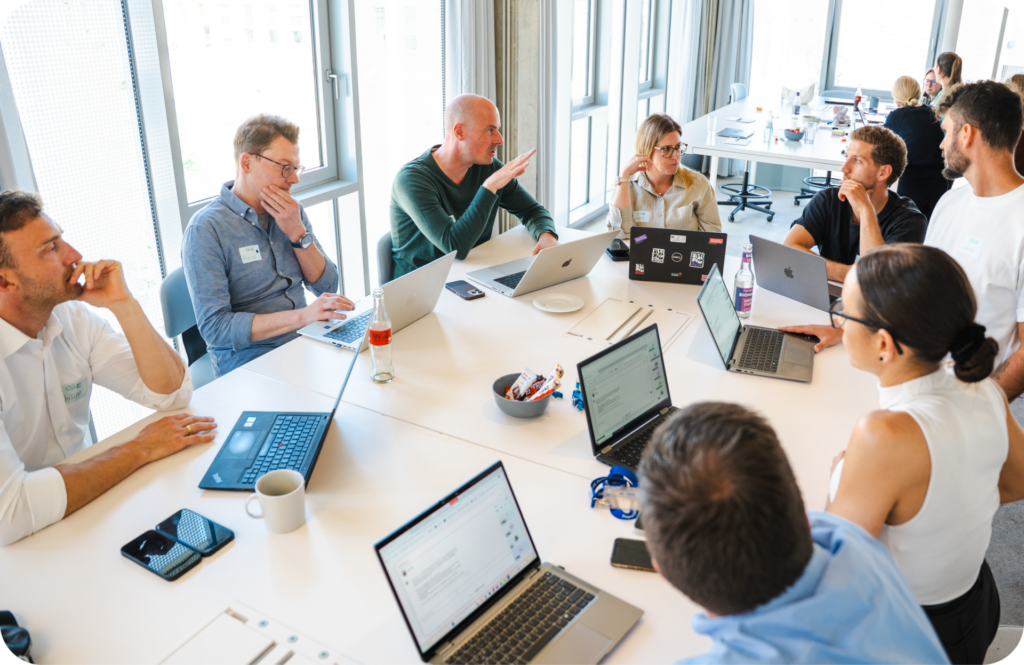
AI is making work faster. But at talentsconnect, an internal AI hack day revealed that speed was not the biggest challenge. The harder part was making sure the work itself was clear enough to automate.
The team split into groups with the same task: build a small AI agent. Samira Helbig, Chief Hybrid Resources Officer at talentsconnect, expected the technology to slow them down. Instead, the teams built quickly. What got in the way were unclear problem definitions, undocumented processes and knowledge that existed only in people’s heads. Some teams discovered while building that the actual problem had never been properly defined.
Sie legt operative Unklarheit offen und beschleunigt sie.
It exposes operational ambiguity and accelerates it.
The experience changed which human skill Samira sees becoming more valuable as AI gets faster: the ability to create structure. Turning complexity into clear processes, documenting knowledge, making it accessible and establishing clear ownership are no longer simply operational hygiene. They are part of what determines whether AI creates value at all.
It has also changed the way talentsconnect works. Process quality, documentation and ownership are now treated as conditions to meet before an agent is built. Experienced colleagues increasingly act as sparring partners who guide and challenge AI-supported work, while the organisation has become more deliberate about what deserves attention and what can wait.
The lesson is a simple one: AI can make a good process faster, but it cannot make an unclear process clear.
Before asking what to automate next, there may be a more important question to answer first:
Do we understand the work well enough to automate it?